A forklift that's down isn't just a machine waiting for a part; it's a bottleneck that halts productivity, delays shipments, and erodes profitability. While a standard forklift maintenance checklist is a start, many are too generic to prevent the real-world issues that ground a fleet. This comprehensive guide goes deeper. It's not just a list; it's an actionable framework for fleet managers and technicians designed to catch failures before they happen, transforming reactive repairs into proactive upkeep.
This resource moves beyond simple check-offs to provide a structured system for asset management. We'll break down eight critical inspection points, from hydraulics to safety systems, organized by frequency: pre-shift/daily, weekly, monthly, quarterly, and annually. Each item includes clear pass/fail criteria, common fault indicators, and quick troubleshooting tips to empower your team on the floor. Crucially, we also provide guidance on when to order replacement parts to minimize downtime and keep your operations moving at full capacity.
To truly embed these practices into your daily workflow, consider formalizing your approach. Integrating robust Standard Operating Procedures for equipment maintenance ensures consistency, accountability, and a higher standard of care across your entire fleet. This guide provides the tactical details for that system, covering everything from tire and wheel inspections to battery and charger maintenance. We'll also link to essential OSHA resources to ensure your documentation and training are as robust as your equipment, protecting both your assets and your people. Let’s dive into the specifics of building a smarter, more resilient maintenance strategy.
1. Tire and Wheel Inspection
A comprehensive tire and wheel inspection is a non-negotiable part of any forklift maintenance checklist. This foundational check involves a detailed examination of the forklift's tires, wheels, and rims to verify proper inflation, adequate tread depth, and overall structural integrity. The primary goal is to identify and address potential failures before they lead to accidents, equipment damage, or costly operational downtime. Operators and technicians must be trained to spot cuts, embedded debris, punctures, bulges, and any signs of separation between the tire and the rim.
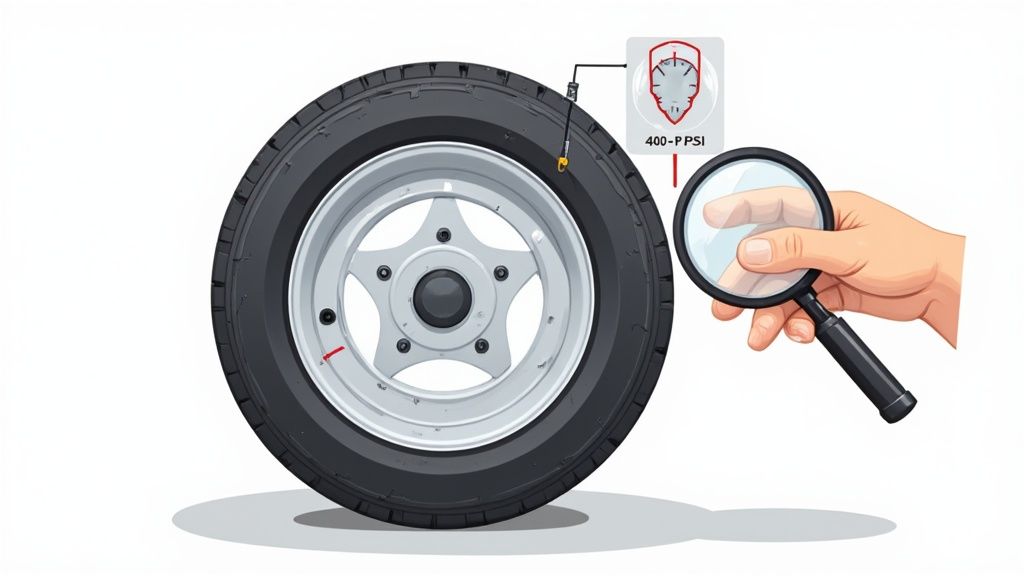
This inspection is critical because forklift tires bear immense, constantly shifting loads. A compromised tire can lead to a loss of stability, especially when lifting heavy or unevenly distributed materials, increasing the risk of tip-overs. Regular checks, as mandated by OSHA guideline 29 CFR 1910.178(q)(7), ensure the equipment operates safely and efficiently.
Implementation and Pass/Fail Criteria
Proper implementation requires a structured approach integrated into daily pre-shift checks. For instance, a warehouse using cushion-tire forklifts on smooth concrete floors might focus on chunking (pieces of the tire breaking off) and flat spots. In contrast, a construction site using pneumatic tires on rough terrain must prioritize checks for punctures, cuts, and correct inflation pressure.
- Pass Criteria: Tires have no visible deep cuts, cracks, or bulges. Tread depth is within manufacturer specifications, and tire pressure (for pneumatic tires) matches the recommended PSI. The wheel and rim are free of cracks, bends, and deformation.
- Fail Criteria: Any visible damage that compromises the tire's structure, such as deep gouges reaching the casing, significant chunking, or pressure loss. Uneven wear patterns are also a fail, as they indicate potential alignment or suspension problems that require further diagnosis.
Actionable Tips and Best Practices
To maximize safety and tire lifespan, integrate these tips into your maintenance protocol:
- Check Pressure When Cold: For pneumatic tires, always measure the pressure before operation begins. Heat from use increases internal pressure and can give a false reading.
- Document Wear Patterns: Maintain a log to track how tires are wearing. Consistent wear on one side may signal an alignment issue, while center wear can indicate overinflation.
- Replace in Sets: When one tire needs replacement, it's best practice to replace its counterpart on the same axle. This ensures balanced handling, stability, and predictable performance.
- Use Tire Pressure Monitoring Systems (TPMS): For large fleets, investing in a TPMS provides real-time data, alerting managers to pressure issues before they become critical safety hazards.
2. Brake System Inspection
A rigorous brake system inspection is a cornerstone of any effective forklift maintenance checklist, directly impacting operator safety and the prevention of catastrophic accidents. This critical check involves a thorough evaluation of all braking components, including brake fluid levels, the condition of pads and shoes, rotor and drum integrity, and overall brake responsiveness. Its primary objective is to detect wear, fluid leaks, and performance degradation before they compromise the forklift’s ability to stop safely under load. Technicians must be adept at identifying issues like worn-out pads, scored drums, or hydraulic leaks.
This inspection is non-negotiable because a forklift's brakes are subjected to intense, repetitive stress, especially in fast-paced environments. A failing brake system can lead to uncontrolled movement, collisions with personnel or infrastructure, and product damage. As highlighted by safety standards like ANSI/ITSDF B56.1, regular and documented brake checks are essential for maintaining a safe operational environment and ensuring compliance.
Implementation and Pass/Fail Criteria
Effective implementation requires integrating brake checks into daily, weekly, and monthly maintenance schedules. For example, a manufacturing facility with high-traffic aisles might implement monthly dynamic brake tests to ensure stopping distances are within acceptable limits. In contrast, a port operation handling heavy cargo containers might focus on weekly inspections of hydraulic lines and fluid levels to prevent system failures under extreme loads. You can learn more about the essentials of forklift safety on flatearthequipment.com for further guidance.
- Pass Criteria: The brake pedal feels firm and responsive, not spongy. Brake fluid is at the correct level and is free of contaminants. Pads/shoes have sufficient material remaining per manufacturer specifications, and rotors/drums are smooth and free of deep grooves or cracks. The parking brake holds the forklift securely on an incline.
- Fail Criteria: Any sign of a fluid leak, a brake pedal that sinks to the floor, or unusual noises (grinding, squealing) during application. Insufficient pad thickness, visible damage to rotors/drums, or a parking brake that fails to engage properly are all immediate fail criteria requiring the forklift to be taken out of service.
Actionable Tips and Best Practices
To ensure maximum reliability and safety from your forklift’s braking system, incorporate these best practices:
- Establish a Performance Baseline: When a forklift is new or newly serviced, measure and record its stopping distance from a set speed. Use this data as a benchmark for future tests to identify performance degradation over time.
- Train Operators on Warning Signs: Educate operators to recognize and report early warning signs like a soft or "spongy" pedal, pulling to one side during braking, or any unusual noises.
- Use Specified Brake Fluid: Always use brake fluid that meets or exceeds the manufacturer's specifications. Using the wrong type of fluid can damage seals and compromise the hydraulic system.
- Document All Adjustments: Keep a detailed log of all brake inspections, adjustments, and part replacements. This history is invaluable for troubleshooting recurring issues and proving due diligence during safety audits.
3. Hydraulic System Inspection
A rigorous hydraulic system inspection is a cornerstone of any effective forklift maintenance checklist. This critical check involves a thorough examination of hydraulic fluid levels, hose conditions, cylinder performance, and pressure settings. The primary objective is to ensure the system that powers the forklift's core functions, like lifting, tilting, and side-shifting, operates flawlessly and without leaks. Operators and technicians must be adept at identifying fluid contamination, hose abrasions, cylinder drift, and any signs of pressure loss.
This inspection is paramount because the hydraulic system is the muscle of the forklift. A sudden failure can lead to a dropped load, creating a severe safety hazard for personnel and risking damage to products and equipment. For instance, food distribution centers have prevented widespread product contamination by catching minor hydraulic leaks during pre-shift inspections. Proactive monitoring, as outlined in safety standards like ISO 4413, ensures the equipment's lifting mechanisms are reliable and safe.
Implementation and Pass/Fail Criteria
Proper implementation demands that hydraulic checks are integrated into daily, weekly, and monthly maintenance schedules. A daily pre-shift check should focus on visual inspections for leaks and verifying correct fluid levels. More in-depth monthly checks might involve pressure testing and filter inspections. For example, an automotive assembly plant that implemented a detailed hydraulic monitoring program saw a 50% reduction in lift-related incidents by identifying performance degradation before failure occurred.
- Pass Criteria: Hydraulic fluid is at the manufacturer-specified level, clear, and free of contaminants. Hoses and fittings are secure with no signs of leaks, cracking, or abrasion. Cylinders and masts operate smoothly without jerking, and there is no cylinder drift when a load is held in a raised position.
- Fail Criteria: Any active fluid leak, no matter how small. Cloudy, milky, or gritty hydraulic fluid indicates contamination. Hoses that are cracked, bulging, or worn are an immediate fail. Any audible whining from the hydraulic pump or erratic lift/tilt movement requires the forklift to be taken out of service for diagnosis.
Actionable Tips and Best Practices
To enhance the safety and longevity of the hydraulic system, incorporate these best practices into your protocol:
- Use Specified Fluid: Always use the OEM-approved hydraulic fluid, typically meeting specifications like ISO VG 46. Using the wrong type can cause seal damage and poor performance.
- Adhere to Filter Schedules: Replace hydraulic filters according to the manufacturer's recommendation, often every 500-1000 operating hours, to prevent contaminants from damaging sensitive components.
- Log System Pressure: Keep detailed pressure logs during periodic maintenance. A gradual drop in pressure over time can signal internal pump wear or a slow leak, allowing for proactive repairs.
- Address Leaks Immediately: A small drip can quickly escalate into a major line rupture under pressure. Tag and remove any forklift with a hydraulic leak from service until it is properly repaired.
4. Battery Inspection (Electric Forklifts)
For any electric forklift fleet, a thorough battery inspection is a cornerstone of the daily forklift maintenance checklist. This crucial check assesses battery charge capacity, terminal corrosion, case integrity, and proper fluid levels for lead-acid batteries. The primary objective is to monitor battery health to prevent unexpected failures, which directly impact forklift availability, operational efficiency, and safety in the workplace. Technicians and operators must be diligent in spotting signs of sulfation, damaged cables, cracks in the casing, or low water levels before they escalate into costly repairs or create electrical hazards.
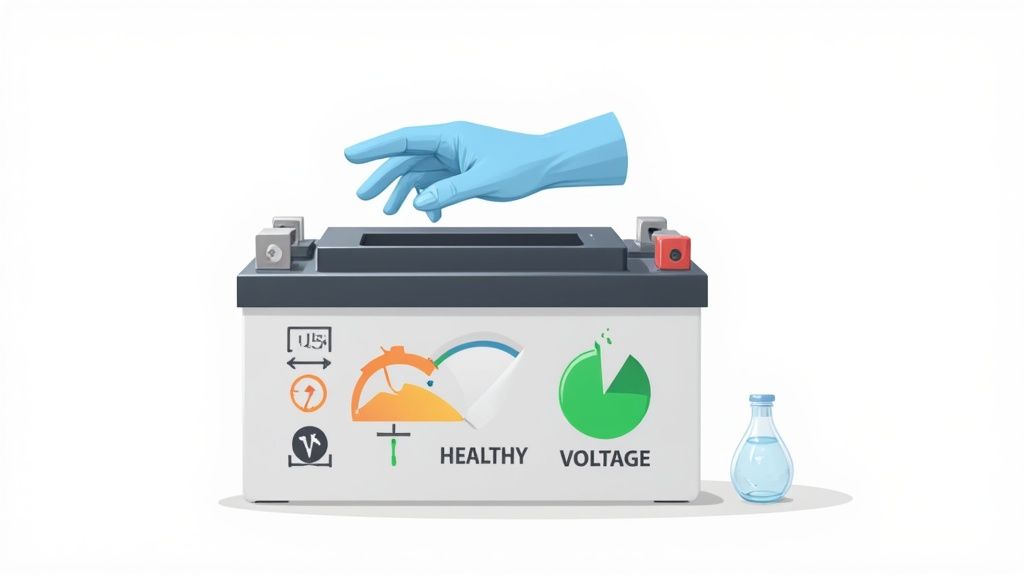
This inspection is critical because the battery is the powerhouse of an electric forklift. A degrading battery not only shortens run times but can also cause performance issues with the lift’s hydraulic and electrical systems. Adhering to strict inspection protocols, as outlined by OSHA electrical safety guidelines, ensures the power source remains reliable and safe for daily use, preventing acid spills, electrical shorts, or fires.
Implementation and Pass/Fail Criteria
Proper implementation involves integrating battery checks into the pre-shift routine and maintaining a detailed log for each battery. For example, a multi-shift distribution center can implement a battery rotation and equalizing charge schedule to extend lifespan, while a smaller operation might focus on daily watering logs for its lead-acid batteries. The approach must be systematic to catch early signs of degradation.
- Pass Criteria: The battery case is free of cracks and damage. Terminals are clean, tight, and show no signs of corrosion. For lead-acid types, water levels are correct. The battery holds a charge consistent with its age and specifications.
- Fail Criteria: Any visible damage to the battery case, corroded or loose terminals, or frayed cables. Low water levels in lead-acid batteries or a battery that consistently fails to hold a sufficient charge are clear indicators of failure.
Actionable Tips and Best Practices
To optimize battery performance and ensure longevity, incorporate these best practices into your maintenance schedule:
- Maintain Proper Watering: For lead-acid batteries, use only distilled or deionized water and fill cells only after a full charge cycle to prevent overflow.
- Keep Detailed Records: Track battery age, charge cycles, water additions, and performance metrics. This data helps predict end-of-life and justifies replacement.
- Establish a Rotation Schedule: In multi-battery operations, rotate batteries to ensure even usage across the entire fleet, preventing premature failure of specific units. For insights on managing your power systems, you can learn more about battery chargers and accessories to complement your maintenance strategy.
- Clean Terminals Regularly: Use a terminal cleaning brush and a solution of baking soda and water to neutralize acid and remove corrosion, ensuring a solid electrical connection.
5. Steering and Control Mechanism Inspection
A thorough inspection of the steering and control mechanisms is a critical safety component of any forklift maintenance checklist. This essential check involves a detailed evaluation of the steering wheel's responsiveness, the functionality of all control levers, and the integrity of the associated mechanical linkages. The main objective is to detect excessive play, binding, or misalignment that could compromise the operator's ability to maneuver the forklift safely and precisely, especially in confined spaces.
This inspection is vital because unresponsive or erratic steering can lead directly to collisions with racking, products, or personnel. Flawless control is fundamental to safe forklift operation and precise load placement. Regular evaluations, in line with ANSI/ITSDF B56.1 safety standards, ensure that the equipment remains predictable and controllable under all operating conditions, preventing accidents and maintaining operational efficiency.
Implementation and Pass/Fail Criteria
Effective implementation demands a standardized procedure performed during every pre-shift check. For example, a narrow-aisle warehouse must be vigilant about steering precision to prevent catastrophic racking collisions. Similarly, manufacturing facilities that implement preventive maintenance programs for steering systems can drastically reduce accidents caused by control failures. The operator should test the steering by turning the wheel from lock to lock with the engine running, feeling for any abnormalities.
- Pass Criteria: The steering wheel responds smoothly and immediately with no excessive play (typically no more than an inch of movement). Control levers operate without sticking or binding, and all hydraulic lines and mechanical linkages are secure and free from leaks or visible damage.
- Fail Criteria: Any noticeable lag, binding, or grinding noise during steering operation. Excessive free play in the steering wheel, fluid leaks from the steering gearbox or hydraulic hoses, or bent/damaged control linkages constitute an immediate failure.
Actionable Tips and Best Practices
To ensure maximum control and extend the life of steering components, incorporate these practices into your maintenance schedule:
- Establish a Baseline: When a new forklift is commissioned, measure and document its steering wheel play and response time. This baseline provides a clear reference for identifying degradation over time.
- Lubricate Regularly: Follow the manufacturer's lubrication schedule for all steering linkage joints, kingpins, and tie rod ends. Proper lubrication is the most effective way to prevent premature wear.
- Check Hydraulic Fluid: Ensure the steering system's hydraulic fluid is at the correct level and is clean. Contaminated or low fluid can cause sluggish response and damage to system components.
- Address Wear Promptly: Replace worn pins, bushings, and bearings as soon as they are identified. Ignoring minor wear can lead to cascading damage to more expensive components like the steering axle or gearbox.
6. Load Backrest and Mast Assembly Inspection
A thorough inspection of the load backrest and mast assembly is a cornerstone of any effective forklift maintenance checklist. This critical check involves a detailed examination of the mast structure, chains, cables, rollers, and the load backrest itself. The primary objective is to identify structural damage like cracks, excessive wear, or misalignment that could lead to catastrophic load failure, operator injury, or equipment collapse during lifting operations.
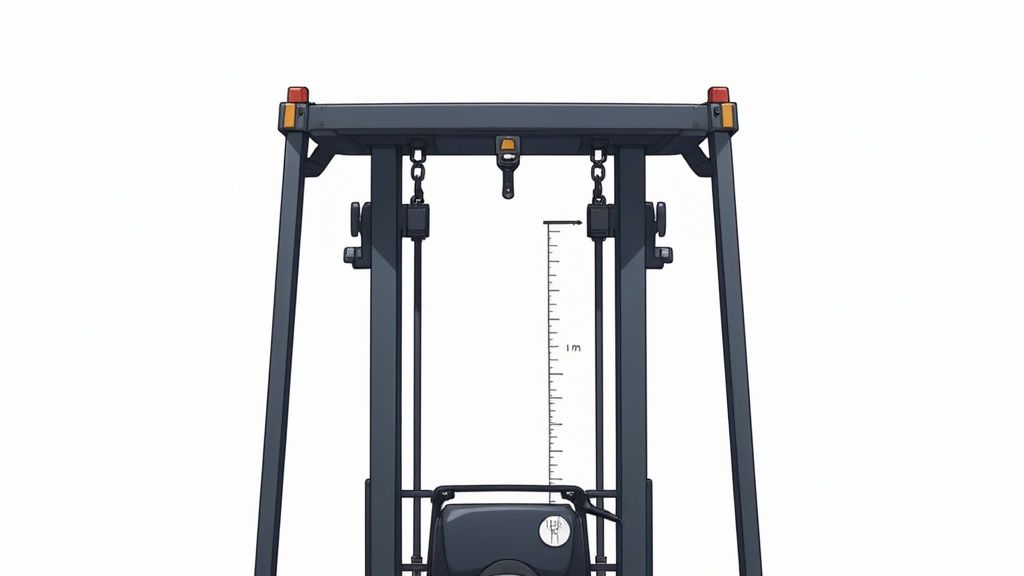
The mast and backrest are the forklift's backbone, directly responsible for lifting and securing loads. A compromised mast channel or a damaged backrest can cause a load to shift, slip, or fall, creating an immediate and severe hazard. Adherence to inspection protocols, as outlined in ANSI/ITSDF B56.1-2020 safety standards, is essential for preventing such incidents and ensuring the structural integrity of the lifting mechanism. For example, a steel mill that caught a hairline mast crack during a routine inspection prevented a potential multi-ton load drop.
Implementation and Pass/Fail Criteria
Proper implementation requires both visual checks during daily pre-shift inspections and more in-depth mechanical assessments at regular service intervals. The environment dictates the focus; a forklift in a corrosive environment requires more frequent checks for rust and structural weakening, while a high-cycle warehouse unit needs closer monitoring of chain stretch and roller wear.
- Pass Criteria: The mast channels, welds, and cross-members are free of cracks, bends, or deformation. Lift chains show no signs of corrosion, broken links, or elongation beyond manufacturer limits. The load backrest is securely attached and has no missing or bent bars.
- Fail Criteria: Any visible crack in the mast or carriage welds constitutes an immediate fail. A lift chain that has stretched more than 3% of its original length must be replaced. Damaged or missing bars on the load backrest also fail the inspection, as they compromise load containment.
Actionable Tips and Best Practices
Integrate these best practices into your maintenance program to ensure the long-term reliability of the mast assembly:
- Utilize Dye Penetrant Testing: For critical-use forklifts, perform periodic dye penetrant testing on mast welds to reveal hairline cracks invisible to the naked eye.
- Maintain Proper Lubrication: Follow the manufacturer's lubrication schedule for mast channels and chains to reduce friction and prevent premature wear.
- Measure Chain Wear Accurately: Use a chain wear gauge to accurately measure elongation. Replace chains in pairs before they reach the maximum allowable stretch to ensure even lifting.
- Keep the Backrest Clear: Ensure the load backrest extension is kept free of debris, straps, or shrink wrap that could snag on the load or interfere with its stability.
7. Engine and Fuel System Inspection (Internal Combustion Forklifts)
A rigorous engine and fuel system inspection is the heart of a reliable internal combustion (IC) forklift maintenance checklist. This crucial check involves a systematic evaluation of the engine's core components, including fluid levels (oil, coolant, transmission), fuel quality, filter status, and the integrity of all hoses and connections. The main objective is to preemptively identify leaks, contamination, or wear that could lead to sudden engine failure, diminished performance, or unsafe operating conditions. Technicians must be skilled in detecting issues like dirty oil, low coolant, frayed hoses, or signs of water in the fuel.
This inspection is vital because the engine is the forklift's prime mover, and its health directly impacts power, efficiency, and emissions. A poorly maintained engine can result in excessive smoke, loss of lifting power, or a complete shutdown, causing significant operational delays. Following manufacturer guidelines, aligned with OSHA's emphasis on maintaining equipment in safe operating condition under 29 CFR 1910.178, ensures the machine remains both productive and compliant.
Implementation and Pass/Fail Criteria
Proper implementation demands that these checks are integrated into both daily and periodic maintenance schedules. For example, a construction site using diesel forklifts in a dusty environment must prioritize frequent air filter checks and fuel quality tests to prevent engine damage from contaminants. In contrast, an indoor operation using LPG forklifts can focus on ensuring secure fuel tank connections and checking for gas leaks.
- Pass Criteria: Engine oil, coolant, and transmission fluid are at their correct levels and appear clean. There are no visible leaks from hoses, gaskets, or the radiator. The fuel filter is clean, and the engine starts smoothly without producing excessive smoke.
- Fail Criteria: Any fluid levels are below the minimum mark or appear milky, sludgy, or contaminated. Visible fuel, oil, or coolant leaks are present. Cracked, bulging, or brittle hoses are an immediate failure, as is difficulty starting the engine or observing unusual exhaust colors.
Actionable Tips and Best Practices
To optimize engine longevity and performance, incorporate these tips into your maintenance protocol:
- Adhere to Service Intervals: Strictly follow the manufacturer's recommendations for changing oil and filters, typically every 250-500 operating hours, to prevent premature wear.
- Test Fuel Quality: Especially in humid environments, test fuel for water contamination monthly. Outdoor operations can prevent costly injector and pump damage by implementing simple fuel quality checks.
- Maintain Coolant Concentration: Ensure the coolant is a 50/50 mix of antifreeze and distilled water to provide proper freeze and boil-over protection, preventing engine overheating.
- Document Everything: Keep meticulous logs of all fluid changes, filter replacements, and any engine-related repairs. This data is invaluable for diagnosing recurring issues and predicting future maintenance needs.
8. Safety Equipment and Warning System Inspection
A rigorous inspection of all safety equipment and warning systems is a cornerstone of any effective forklift maintenance checklist. This crucial check involves a systematic verification of all features designed to protect the operator and surrounding personnel, including seat belts, horns, backup alarms, warning lights, reflectors, and load capacity indicators. The primary objective is to ensure these critical systems are fully functional, audible, and visible, thereby preventing accidents and mitigating workplace hazards before they can cause injury or damage.
This inspection is vital because a forklift's warning systems are the primary means of communication in a busy, and often loud, industrial environment. A malfunctioning backup alarm or a dim strobe light can lead directly to pedestrian collisions. Adherence to safety standards, such as those outlined in ANSI/ITSDF B56.1, ensures that the equipment provides clear and unambiguous warnings to everyone in the vicinity, which is fundamental to maintaining a safe operational area. Learn more about enhancing forklift safety protocols and the equipment that makes it possible.
Implementation and Pass/Fail Criteria
Effective implementation requires that these checks are performed diligently before every shift and documented. For example, a facility with high pedestrian traffic must prioritize the audible and visual checks of backup alarms and strobe lights. In contrast, an outdoor operation will focus more on the condition of reflectors and headlights for visibility during dawn, dusk, or adverse weather conditions.
- Pass Criteria: The seat belt latches securely and shows no signs of fraying. The horn is loud and clear (meeting or exceeding 97 decibels), and the backup alarm activates instantly when reversing. All warning lights and reflectors are clean, intact, and fully functional. The load capacity plate is legible.
- Fail Criteria: Any non-functional safety device constitutes an immediate fail. This includes a non-working horn, a silent backup alarm, a cracked or burnt-out warning light, or a damaged seat belt. A missing or unreadable data plate also fails the inspection, as the operator cannot verify load limits.
Actionable Tips and Best Practices
To ensure all safety systems remain in top condition, incorporate these practices into your maintenance routine:
- Test Before Each Shift: Mandate that operators test every safety device, from the horn to the seat belt, as part of their pre-operation check and document the results.
- Schedule Proactive Replacements: Don't wait for failure. Replace warning light bulbs, strobe components, and backup alarm batteries at scheduled intervals based on manufacturer recommendations.
- Keep It Clean: Regularly clean lenses on warning lights and reflective tape to ensure maximum visibility. Dirt and grime can significantly reduce their effectiveness.
- Consider Upgrades: For enhanced safety in high-traffic areas, consider retrofitting older forklifts with modern proximity detection systems or blue spot warning lights that provide additional visual alerts for nearby pedestrians.
8-Point Forklift Maintenance Checklist Comparison
| Inspection | Core focus | Key benefits (Value) | Frequency & Quality ★ | Target audience 👥 | Unique selling points ✨ / Cost 💰 |
|---|---|---|---|---|---|
| Tire and Wheel Inspection | Inflation, tread depth, rim & lug integrity | Prevents failures, longer tire life, safer loads | Daily / before shift · ★★★★☆ | 👥 Warehouses, fleets, rough-terrain sites | ✨ TPMS-ready, quick visual checks · 💰 Low / high ROI |
| Brake System Inspection | Fluid, pads/shoes, rotors/drums, responsiveness | Prevents catastrophic failure, regulatory compliance | Weekly–biweekly · ★★★★★ | 👥 Ports, manufacturing, safety-first fleets | ✨ Technician-led diagnostics, emergency brake test · 💰 Medium (critical spend) |
| Hydraulic System Inspection | Fluid levels, hoses, cylinders, pressure, filters | Prevents leaks, maintains lift capacity, avoids contamination | Weekly; detailed monthly · ★★★★★ | 👥 Assembly lines, heavy-lift yards, distribution centers | ✨ Pressure logging, OEM fluid specs · 💰 Medium–High (specialized tools) |
| Battery Inspection (Electric Forklifts) | Voltage, capacity, terminals, electrolyte, charger checks | Extends battery life, reduces downtime, safety vs electrical hazards | Weekly capacity; monthly load test · ★★★★☆ | 👥 EV fleets, cold storage, high-utilization warehouses | ✨ Charger compatibility, rotation schedules, lithium upgrade advice · 💰 Medium (replacement = high capex) |
| Steering & Control Mechanism Inspection | Steering play, lever range, linkage, hydraulic steering | Ensures precise control, reduces operator fatigue, prevents failures | Weekly; detailed monthly · ★★★★☆ | 👥 Narrow-aisle, precision handling sites, manufacturing | ✨ Baseline response metrics, ≤1" play limit · 💰 Medium |
| Load Backrest & Mast Assembly Inspection | Backrest, mast alignment, chains/cables, rollers, welds | Prevents load drops, ensures vertical stability, structural safety | Weekly visual; quarterly structural · ★★★★★ | 👥 Heavy-load handlers, steel/warehouse operations | ✨ Dye-penetrant crack checks, chain elongation thresholds · 💰 High (repair cost) 🏆 |
| Engine & Fuel System Inspection (IC) | Oil, filters, fuel quality, coolant, hoses, exhaust | Prevents engine failure, maintains fuel efficiency, lowers emissions | Weekly checks; detailed every 50 hrs · ★★★★☆ | 👥 Outdoor construction, IC equipment fleets | ✨ Fuel testing protocols, waste-fluid compliance · 💰 Medium (ongoing fluids) |
| Safety Equipment & Warning System Inspection | Seat belts, horn, lights, alarms, load indicators | Reduces accidents, ensures visibility, regulatory compliance | Daily / before shift · ★★★★★ | 👥 All operators, busy docks, public-facing sites | ✨ QR-verifiable checks, proximity add-ons · 💰 Low–Medium (maintenance) 🏆 |
Putting Your Checklist into Action: From Inspection to Uptime
Transitioning from simply having a forklift maintenance checklist to actively implementing it is the pivotal step that separates average operations from industry leaders. The detailed inspection points covered in this guide, from daily pre-shift checks to comprehensive annual overhauls, are more than just a list of tasks. They represent a strategic framework for transforming reactive repairs into proactive, predictive maintenance. By embedding these checks into your daily, weekly, and monthly workflows, you create a powerful data stream that illuminates the health of your entire fleet.
This approach shifts maintenance from a necessary cost center into a competitive advantage. It empowers technicians to identify subtle signs of wear on hydraulic hoses or brake pads long before they lead to catastrophic failure and unscheduled downtime. It gives fleet managers the concrete data needed to make informed decisions about ordering replacement parts, scheduling major services, and planning for fleet retirement or expansion. An effective checklist is a living document, one that evolves with your equipment and operational demands.
Key Takeaways for Building a Resilient Maintenance Program
Mastering this process is not about perfection on day one; it's about consistent application and refinement. As you integrate this comprehensive forklift maintenance checklist, focus on these core principles:
- Consistency is Non-Negotiable: The pre-shift inspection is your first line of defense. Ensure every operator performs it without fail before every single shift. This simple habit catches over 80% of potential mechanical issues before they escalate.
- Documentation is Your Data: Meticulous record-keeping isn't just for OSHA compliance. It’s your operational history. These records reveal patterns in component failures, track maintenance costs per unit, and justify budget requests for new equipment or technician training.
- Empower Your Technicians: Your technicians are on the front lines. Provide them with the tools, training, and authority to not only follow the checklist but also to flag potential issues that fall outside its scope. Their expertise is an invaluable asset.
- Plan Your Parts Supply Chain: Don't wait for a breakdown to identify your parts supplier. A failed inspection on a critical component like a mast chain or a hydraulic cylinder should trigger an immediate and efficient procurement process. Knowing who to call and having confidence in their inventory and shipping speed is crucial.
This proactive mindset is mirrored in other areas of fleet management. For vehicles that operate on public roads, a similar daily diligence is required by law and is equally critical for safety. A comprehensive DOT pre-trip inspection guide provides a structured process for commercial vehicle operators, ensuring road-readiness and compliance in much the same way our checklist ensures warehouse readiness. The underlying principle is the same: systematic, documented inspection prevents accidents and costly downtime.
Your Next Steps: Building a Proactive Maintenance Culture
Ultimately, a world-class forklift maintenance program is built on the foundation of a robust checklist, but it is sustained by a culture of safety, accountability, and continuous improvement. The goal is to create an environment where a flagged issue on an inspection form is seen not as a problem, but as an opportunity to prevent a larger one. This proactive approach directly translates to increased uptime, enhanced operator safety, and a healthier bottom line. You have the blueprint; now is the time to build a more resilient, efficient, and safer operation, one inspection at a time.
When your checklist uncovers a need for a reliable part, you can’t afford delays. Flat Earth Equipment provides technician-led support and nationwide same-day shipping on precision-fit replacement parts for all major brands, ensuring you get the right component the first time. Visit Flat Earth Equipment to find the parts you need to turn your maintenance checklist into immediate, actionable solutions that keep your fleet moving.